ServiceNow vs Zendesk: Which Platform Actually Fits Your Support Operation in 2026?

Ed Nunez
Marketing

Enterprise support teams don’t suffer from a lack of tools; they suffer from the wrong ones. Too many platforms promise scale, automation, and control, then quietly introduce friction where teams can least afford it. That’s exactly why the ServiceNow versus Zendesk debate keeps resurfacing in enterprise conversations.
On the surface, the two platforms look comparable. Dig deeper, and it becomes clear they were built for fundamentally different jobs. Choosing between them isn’t a feature decision, but an operational one.
If your support workflows already live inside Slack or Teams, this tension probably feels familiar. Turning constant conversation into structured, trackable work is its own challenge, one we break down in How to Automate Your Help Desk Workflow with Slack.
The Real Difference Between ServiceNow and Zendesk
Most comparisons flatten this conversation into a checklist. That’s a mistake. The difference between ServiceNow and Zendesk isn’t about who has more features. It’s about what problem each platform was designed to solve from day one.
Zendesk is a support-first platform, optimized around conversations, resolution, and experience. ServiceNow is an enterprise workflow engine, built to enforce process, governance, and control across IT and beyond. Both include ticketing, but they treat it very differently.
If you remember one thing, remember this:
Zendesk optimizes support conversations. ServiceNow orchestrates enterprise processes.
Everything else, complexity, cost, usability, follows from that design choice.
Once you understand that framing, the rest of the comparison becomes much easier to navigate.
Zendesk — Customer Support-First, Not IT-First
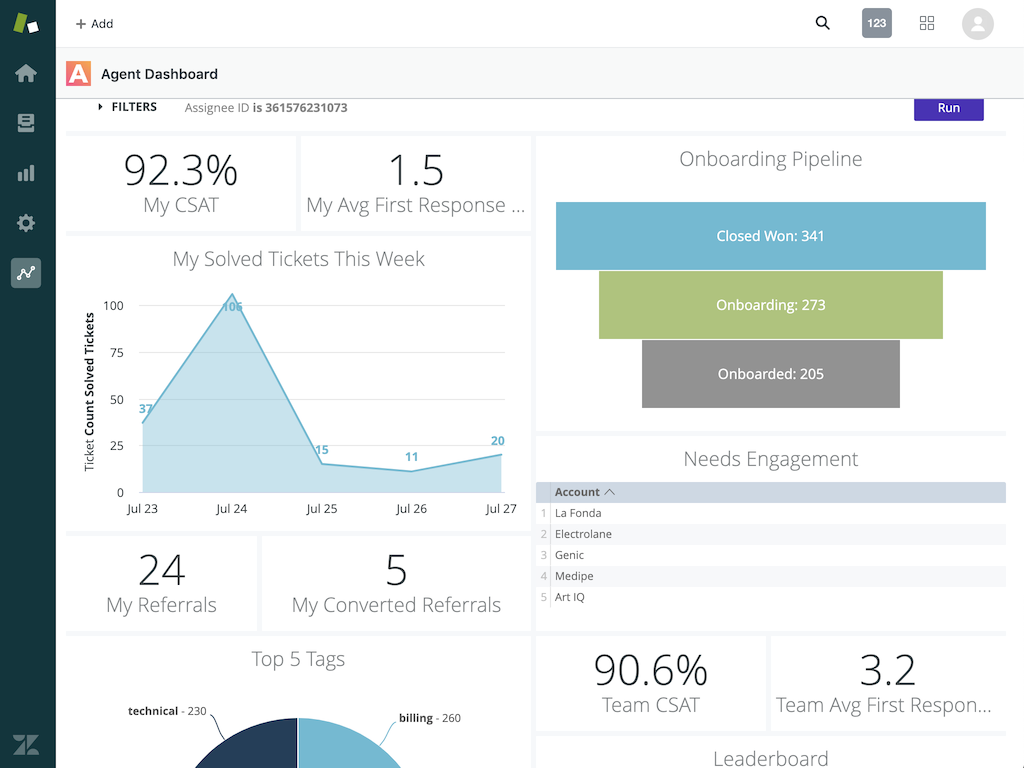
Zendesk's documentation makes its intent obvious. This is a platform designed to help support teams respond faster, work smarter, and maintain clarity as volume grows. (While Zendesk does offer employee service management solutions, this comparison focuses on their core customer support platform, which is what most teams evaluate against ServiceNow ITSM.) Ticketing isn't buried inside a broader system. It's the core experience.
Zendesk centralizes requests from email, chat, voice, and messaging into a single workspace. Automation handles routing, prioritization, and repetitive tasks, while knowledge bases and self-service tools reduce inbound volume. Reporting stays focused on what support leaders actually need: resolution time, backlog health, and customer satisfaction.
In the Zendesk vs ServiceNow comparison, Zendesk stands out for usability. Teams don’t need months of configuration or outside consultants to see value. Agents adopt it quickly, managers gain visibility fast, and workflows evolve without constant rebuilds.
That ease of use is intentional, and it’s also where the contrast with ServiceNow becomes sharp.
ServiceNow — Built for Enterprise Control and Complexity
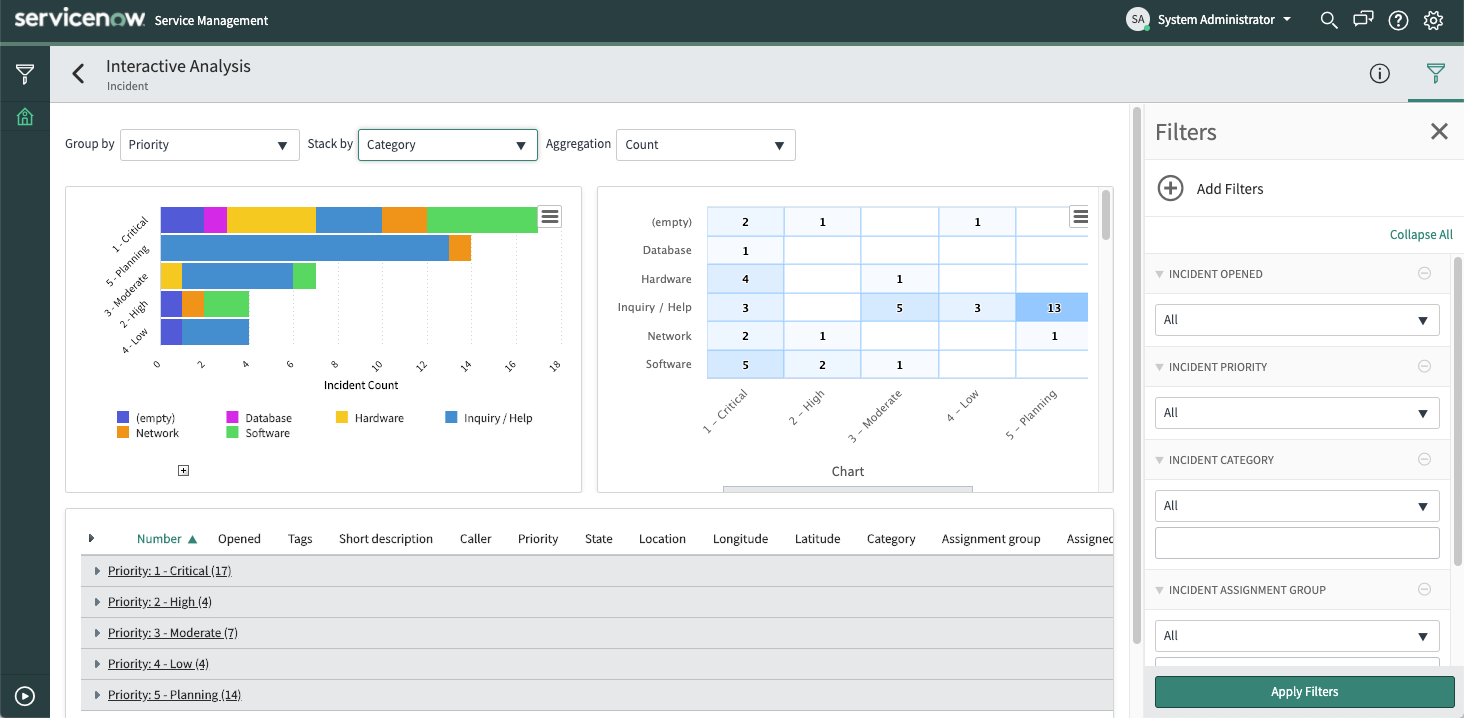
ServiceNow doesn’t try to be lightweight. Its documentation reflects a platform built for organizations that need deep control over IT services, assets, and cross-department workflows.
Ticketing exists inside a broader ecosystem that includes incident, problem, change, and configuration management. Every request can be tied to infrastructure, approval chains, and compliance rules. This gives enterprises a single system of record, but it also introduces complexity by design.
In a ServiceNow vs Zendesk evaluation, ServiceNow makes sense when support is inseparable from IT operations. If resolving a ticket means managing risk, enforcing governance, or tracking downstream impact, ServiceNow provides the structure those environments demand.
That structure, however, comes with overhead, which brings us to where teams often feel the difference most.
Ease of Use vs Depth of Control
This is where platform choice stops being theoretical and starts affecting day-to-day work. The trade-off between Zendesk and ServiceNow shows up the moment agents log in.
Zendesk prioritizes speed, clarity, and adoption. Configuration exists, but it rarely blocks action. ServiceNow prioritizes precision and consistency, often requiring dedicated ownership, technical expertise, and ongoing maintenance.
Neither approach is wrong, but the mismatch hurts. Teams that need flexibility will feel constrained by over-engineering. Teams that need governance will struggle with tools that move too freely.
This tension carries directly into how automation and scale actually work in practice.
Reporting, Automation, and Scale — Not All “Enterprise” Is Equal
Both platforms talk about automation and analytics, but they optimize for different outcomes.
Zendesk focuses on support performance: ticket volume, resolution speed, agent efficiency, and customer experience. Automation removes repetitive work and keeps conversations moving.
ServiceNow treats automation as process enforcement. Workflows ensure consistency, compliance, and auditability across systems. Reporting supports operational health and risk management at the enterprise level.
When teams argue about the difference between ServiceNow and Zendesk, they’re often debating experience optimization versus process optimization, whether consciously or not.
Where Foqal Fits in the ServiceNow vs Zendesk Landscape
Understanding ServiceNow versus Zendesk is one thing. Making either platform work inside modern, message-driven teams is another.
That’s where Foqal comes in.
Foqal operates directly inside Slack and Microsoft Teams, turning everyday conversations into structured, trackable support workflows. Instead of forcing teams to leave their tools to log tickets, Foqal captures requests where work already happens, then applies routing, automation, SLAs, and analytics behind the scenes.
While Foqal can replace Zendesk or ServiceNow, it also integrates with them.
Requests created in Slack or Teams can sync bi-directionally with Zendesk or ServiceNow, giving enterprises the governance and system-of-record benefits they need without sacrificing speed or adoption. Teams get conversational support on the front end and structured ticketing on the back end.
If you want a deeper look at why this model works, Integrating Slack or Teams with Ticketing Systems: Streamlining Support breaks down how messaging-first workflows reduce friction without losing accountability.
Foqal fits between platforms, translating conversation into execution.
So Which One Should You Choose?
There’s no universal answer, only alignment.
Choose Zendesk if your support organization needs speed, clarity, and flexibility. If your success metrics revolve around experience and responsiveness, Zendesk fits naturally.
Choose ServiceNow if support is deeply tied to IT operations, infrastructure, and governance. If compliance and control are non-negotiable, ServiceNow earns its complexity.
And if your teams live in Slack or Teams while relying on either platform behind the scenes, tools like Foqal help close the gap between conversation and system of record.
The Bottom Line
The ServiceNow versus Zendesk debate isn’t about which platform is more powerful. It’s about which one removes friction instead of introducing it.
Zendesk keeps support teams focused on resolution and experience.ServiceNow keeps enterprises aligned, governed, and controlled.
The smartest teams don’t chase features. They design workflows that actually match how work gets done.
The real takeaway from the ServiceNow vs Zendesk conversation isn’t about choosing sides. It’s about recognizing that modern support doesn’t live in tickets alone. It lives in conversations, handoffs, and the spaces where teams actually collaborate. The tools you choose should support that reality, not fight it.
As support operations continue to evolve, the strongest teams aren’t replacing their platforms. They’re redesigning how work flows between them.
What Comes Next
Legacy platforms aren’t the problem. The way teams are forced to use them is.
If your support work actually happens in Slack or Teams, Foqal helps you capture it, structure it, and connect it back to the systems you already rely on without slowing anyone down.
Subscribe to our newsletter
Get the latest insights on IT operations, AI, and workplace productivity delivered to your inbox.
Ready to transform your support?
See how Foqal can help your team deliver faster, smarter support.
Start Free TrialRelated Articles
Burnout in IT is an architecture problem, not a personality problem
Burnout isn’t a personal flaw—it’s built into how IT teams are structured, leaving a single admin on call at 9 pm with no backup. Discover the design choices that create endless after‑hours demands and practical steps to rebuild a resilient, sustainable support system.
Nobody reads your rollout announcement
Even a perfectly crafted announcement can vanish unread among thousands of messages—discover why tone, timing, and targeted advocacy matter more than polish, and learn the six‑step ladder that actually drives users to act.
The hidden ticket cost of every security control you ship
Deploying security controls can unleash a flood of support tickets that cripple help desks for weeks—learn why the hidden ticket cost matters and how to forecast it before shipping.